State of Local AI Agents in 2026: DeepSeek 4, Qwen 3.6 & Manus Alternatives
Published on May 2, 2026 • 8 min read
Relying exclusively on cloud-based API providers for agentic workflows is becoming a massive liability for developers. Between unpredictable latency spikes, exorbitant token costs during complex multi-step reasoning, and severe corporate data privacy risks, the industry is aggressively pivoting toward local inference. Running autonomous agents entirely on consumer hardware—without an internet connection—is no longer a theoretical benchmark; it is the production standard.
The rapid evolution of quantization methods like GGUF and EXL2, paired with unified inference engines like Ollama, has democratized access to frontier-level intelligence. In this breakdown, we examine the current architecture of local AI orchestration, comparing the latest open-weights titans: DeepSeek V4, Qwen 3.6, Kimi 2.6, Gemma 4, and how developers are utilizing Hermes models to build open-source alternatives to web agents like Manus.
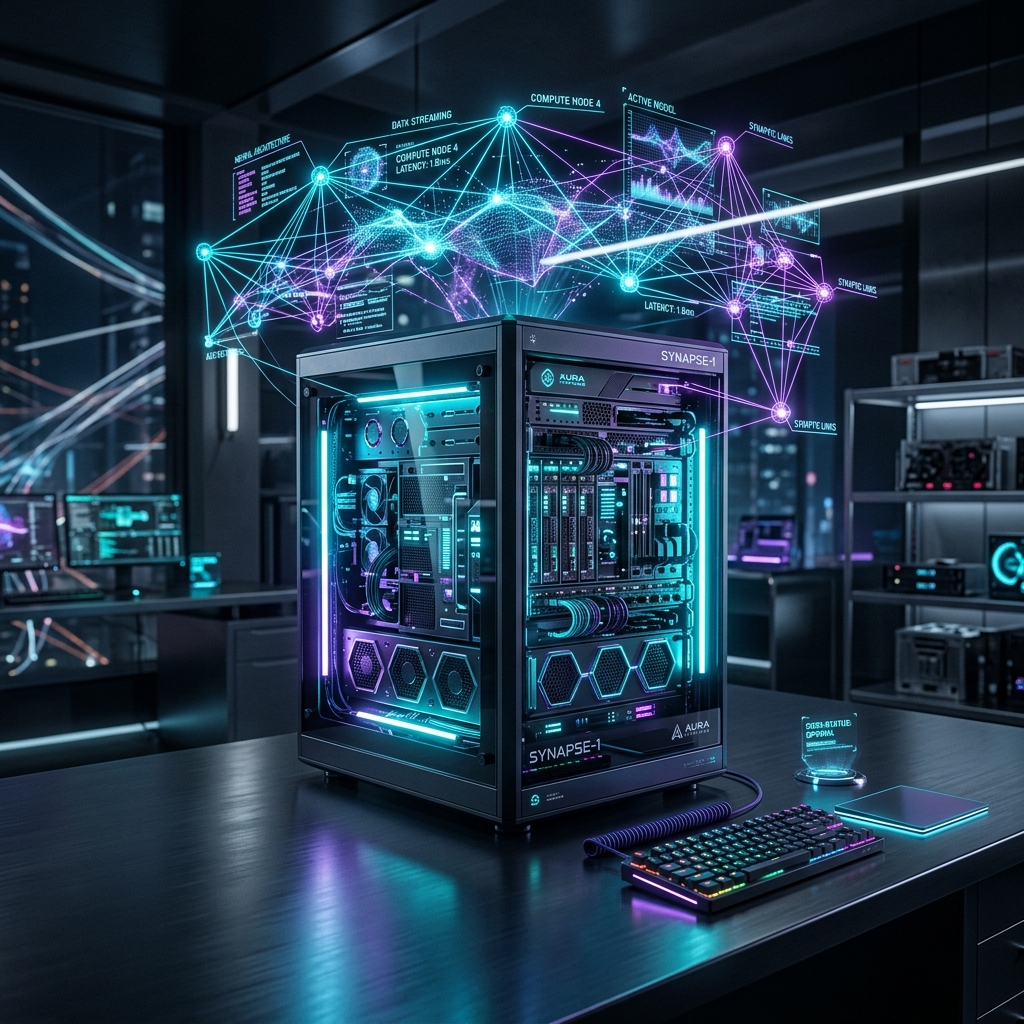
The MoE Powerhouses: DeepSeek V4 & Qwen 3.6
When engineering an autonomous agent capable of writing code, debugging its own execution errors, and managing a persistent memory context, raw parameter count is less important than architectural efficiency. This is where Mixture of Experts (MoE) models have completely taken over local environments.
DeepSeek V4 has established itself as the gold standard for logical reasoning and mathematical workflows. By heavily optimizing its sparse MoE routing, DeepSeek V4 achieves frontier-level code generation while only activating a fraction of its total parameters during inference. This allows developers with standard 24GB VRAM consumer GPUs (like the RTX 4090 or 5090) to run highly quantized versions of the model at 30+ tokens per second.
Conversely, Qwen 3.6 dominates the multilingual and multimodal space. For agents that require robust vision capabilities—such as parsing UI elements on a screen or reading complex charts—Qwen 3.6 offers unparalleled zero-shot visual comprehension. Its highly optimized KV cache makes it exceptionally capable of handling massive system prompts and RAG (Retrieval-Augmented Generation) databases without degrading output quality.
The Function Calling Masters: Nous Hermes
An LLM is just a text generator until you give it tools. The bridge between a chatbot and a true "Agent" is strict, deterministic function calling. While base models frequently hallucinate JSON syntax or forget schema parameters during complex tool use, the Hermes finetunes (specifically those trained on the Qwen and Llama architectures) are practically flawless.
For developers building local orchestration frameworks, routing natural language requests through a lightweight Hermes model ensures that external API calls, bash command executions, and database queries are formatted precisely to specification. It acts as the perfect "Router Expert" in a local multi-agent system.
Edge Computing: Gemma 4 and Kimi 2.6
Not every agent needs 70 billion parameters. For background tasks, UI automation, and mobile edge computing, smaller is better. Gemma 4 (Google's open-weights offering) and Kimi 2.6 have pushed the boundaries of what is possible in the 7B to 9B parameter class.
These models are specifically distilled to fit seamlessly into unified memory architectures, particularly Apple Silicon (M3/M4 Macs). By utilizing Neural Processing Units (NPUs) rather than traditional GPU compute, developers can deploy Kimi 2.6 as a persistent, background OS-level agent that monitors email, schedules tasks, and organizes files locally with virtually zero battery drain.
Building an Open-Source Manus Web Agent Alternative
Closed-ecosystem web agents like Manus demonstrated the incredible potential of autonomous browser control. However, developers are now rapidly replicating this capability locally using libraries like Playwright and Selenium, driven by vision-capable local models.
To build a local web agent, the workflow typically involves taking a headless browser viewport, converting the DOM elements into an accessibility tree, and feeding that text (alongside compressed screenshots) into a multimodal model like Qwen 3.6. The agent analyzes the DOM, outputs specific X/Y coordinate clicks or CSS selector actions, and executes the navigation loop autonomously.
A major bottleneck for training these custom web-navigation models is acquiring clean, diverse, high-quality multimodal training data from across the web. Researchers frequently utilize automated bulk media tools like Instabatch to rapidly extract uncompressed video and image datasets from various social networks, feeding them directly into local RAG pipelines to fine-tune the agent's visual recognition capabilities.
Recommended Hardware for Local Agents (Mid-2026)
- GPU (Nvidia): Minimum RTX 3090/4090 (24GB VRAM) for comfortable 30B+ parameter MoE inference via ExLlamaV2.
- Apple Silicon: M3 Max or M4 Pro with 64GB+ Unified Memory (The absolute best value for running massive 70B+ quantized models via MLX or Llama.cpp).
- RAM: 64GB DDR5 (Critical for offloading layers when VRAM is exhausted).
Frequently Asked Questions
What is the difference between an LLM and an AI Agent?
An LLM (Large Language Model) is simply a text-prediction engine. An AI Agent is a system that wraps around an LLM, giving it persistent memory, the ability to formulate multi-step plans, and tools to interact with the outside world (like web browsing, running code, or calling APIs).
Is Qwen 3.6 better than DeepSeek V4 for coding?
While both are exceptional, DeepSeek V4 currently benchmarks higher for complex, multi-file software engineering and advanced mathematical reasoning. Qwen 3.6 excels in multimodal tasks, making it superior for vision-based agents interacting with UI elements.
How do local web agents bypass CAPTCHAs?
Local web agents struggle natively with advanced CAPTCHAs. Developers usually integrate third-party CAPTCHA-solving APIs or route the agent's headless browser through residential proxy networks to avoid triggering the security flags in the first place.
What is the best local framework for AI Agents?
In 2026, frameworks like AutoGen, CrewAI, and LangGraph remain industry standards for orchestrating multi-agent conversations. For managing the local model inference serving those frameworks, Ollama and LM Studio are the most widely deployed backends.